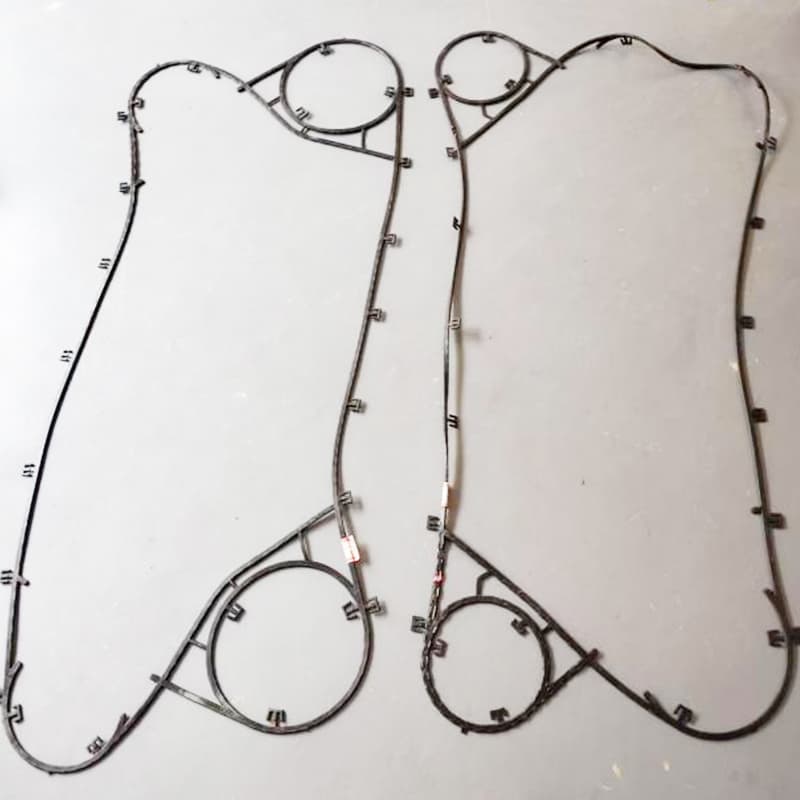
Sealing Gasket for Shield Tunnel Segments
Category
Sub-Category
Completed orders
Price
Delivery Cost
Minimum Order
Location
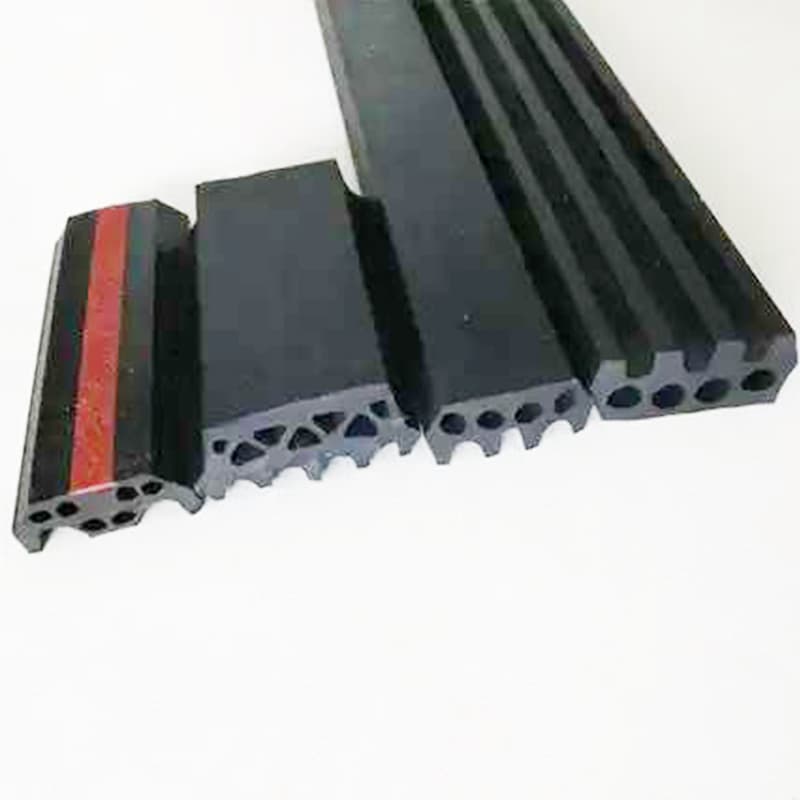
The core function of tunnel sealing strips is to solve the waterproofing and seepage prevention problems of tunnel structures (such as shield tunnel segments and lining joints). They must also adapt to complex tunnel conditions (such as structural settlement, vibration, and corrosive environments). Their performance characteristics revolve around "sealing reliability, environmental adaptability, and structural compatibility."
High seepage resistance and waterproofing:
They must withstand the pressure of groundwater in the tunnel (typically 0.3-1.0 MPa, reaching over 1.5 MPa in special geological conditions). After the strip adheres to the segment/lining joints, it forms a "continuous sealing barrier," preventing groundwater and sediment from seeping into the tunnel interior.
Most use either "water-swellable" or "elastic compression" designs: water-swellable strips can absorb water and expand (expansion ratio 150%-300%) to fill tiny gaps, while elastic strips achieve long-term sealing through structural compression. In some scenarios, both types are used in combination.
In tunnel environments that are chronically humid and lack sunlight (or have weak lighting), the strips must be resistant to... "Damp heat aging" and "ozone aging" (vehicle exhaust contains ozone) are required, with a standard service life of ≥20 years (matching the tunnel structure's design life). After aging, tensile strength retention should be ≥70%, and elastic recovery rate ≥80%.
UV resistance does not need to be excessively high (UV radiation is weak inside tunnels), but it must withstand temperature fluctuations (-30℃~60℃, down to -40℃ in frigid northern regions), without becoming brittle at low temperatures or softening and deforming at high temperatures.
The adhesive strip has high cross-sectional precision (error ≤0.5mm), adaptable to the sealing grooves of tunnel segments/linings (commonly "U-shaped," "O-shaped," and "composite" cross-sections), allowing for easy embedding and preventing misalignment during installation.
Some adhesive strips feature "positioning protrusions" or "adhesive layers," enabling quick fixation within the sealing groove and reducing sealing failures caused by construction deviations.
If you would like more information about Tunnel segment gaskets, please feel free to contact us.
 Company Rating

Overall Rating
Description Rating
Delivery time
Contact
Professionalism
You may like this
NBR (Nitrile) Standard O-Ring for Hydraulic Systems
Door and Window Sealing Strips
Rubber High-Pressure Oil Hose